Picture two people exchanging messages. One writes a long, careful paragraph and gets a two-word reply. The other sends a quick "thinking of you" note and receives a warm, detailed answer. Neither is being careless. They may simply express care in different ways, and that gap is what love languages try to describe. This guide covers the five types, how to spot the one that comes most naturally, and how each can show up in everyday conversation, including the written kind that happens online.
What Are Love Languages, Exactly?
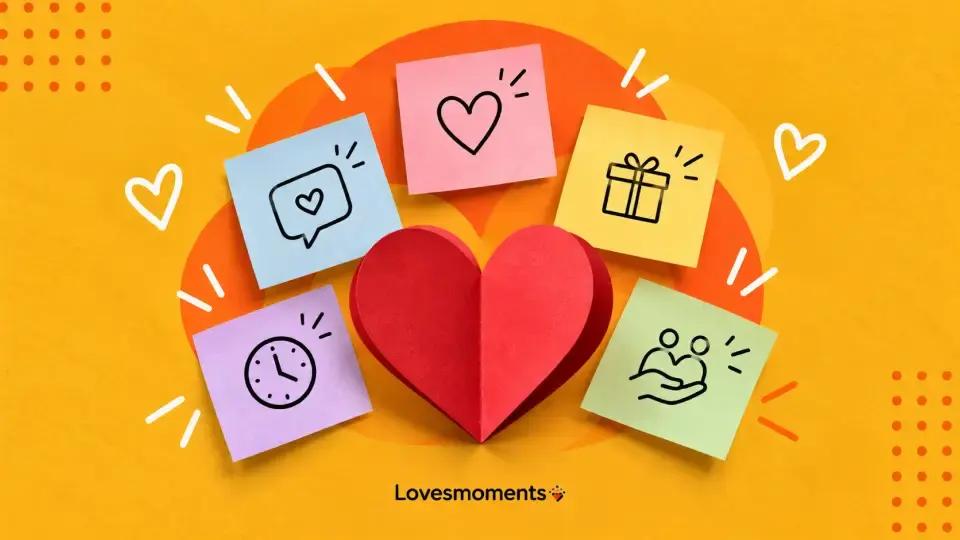
Love languages are a popular framework for how people tend to give and receive care. Author Gary Chapman introduced the idea in a 1992 book, and his official site still describes the five categories he outlined: words of affirmation, quality time, receiving gifts, acts of service, and physical touch.
The general principle is that most people demonstrate their care as they would like to be cared for. An act that is very important for one person may be insignificant for someone else. In this respect, love languages are one possible approach to studying communication between people, not the only option available. The most valuable aspect of this approach lies in its common language.
The Five Love Languages, One at a Time
Each language below describes a tendency rather than a fixed trait, and most people recognize themselves in more than one.
Words of Affirmation
This language focuses on the content of what is said or written: praise, positive comments, gratitude, and remarks about a task performed well. Such people would value one sincere sentence more than an impressive act. Concrete remarks are more appreciated than generic ones; saying "I like the way you did this" is more effective than just "nice." This applies to the opposite side as well, because inappropriate words may cause pain. Praise given too suddenly and too powerfully is another example of such affection.
Quality Time
"Quality time" is all about giving undivided attention. The focus should be on being present, not on the duration of the conversation. In terms of writing, it would involve responding to what the other party has to say, either asking a question or bringing up something that was discussed in a previous conversation. There is some commonality between quality time and listening. Those unsure how to listen in a thread of messages could begin by responding to what the person just said before adding something else.
Acts of Service
In this case, care emerges in terms of assistance, which is taking some burden from another's hands, making good on a little promise, or fulfilling one's promise. What counts here is not how much one does but rather its dependability. In the process of communication, this may involve sharing just a link in reply to a question posed by another.
Receiving Gifts
The gift itself is secondary. What counts is the thought it shows: someone listened, remembered, and acted on it. It doesn't need to be expensive or even tangible. A person who mentions a favorite book and later gets a note saying "I found something by the same author" has received exactly this kind of attention. In writing, remembering small details is the closest equivalent.
Physical Touch
The Physical Touch is the least word-based of all languages; thus, it is the most difficult one to convey via screens. Individuals who use this language prefer warm, close treatment from others. In the online environment, such warmth can be conveyed through the tone of writing, including friendliness, unhurriedness, and consistency in communication. A person preferring this language appears reserved in texts but pays attention to the warmth of the conversation.
Work Out Which Love Language Comes Most Naturally
A formal test isn't necessary to start. A few questions can bring patterns to the surface:
-
Which message or gesture has stayed in memory the longest?
-
What does this person tend to do for others without being asked?
-
What does this person ask for most often, or wish others did more?
-
Which small disappointments keep coming back, such as a reply that felt too short, a promise that wasn't kept, or a compliment that sounded generic?
Patterns matter more than any one answer. Once one is visible, it becomes easier to work out how to express your feelings in a way that suits both people, for instance, by saying "a quick message in the middle of the day means a lot to me" instead of hoping the other person guesses. It also helps to look in both directions. What someone gives freely often reveals their own language, while what they ask for reveals what they hope to receive, and the two aren't always the same.
How to Communicate in a Relationship Using Love Languages
The framework is most useful when it turns into small, concrete habits. The table below shows how each language can appear in written conversation.
|
Language |
What it can look like in writing |
|
Words of Affirmation |
A specific compliment, a thank-you that names what was appreciated, encouragement after good news |
|
Quality Time |
A reply that builds on the last message, a follow-up question, a return to an earlier topic |
|
Acts of Service |
A helpful link, a recommendation, following through on something mentioned before |
|
Receiving Gifts |
Remembering a detail and bringing it back, such as a hobby or an upcoming event |
|
Physical Touch |
Warm, friendly phrasing and a steady, unhurried pace |
There are two ways to ensure that these practices become even easier. One way is not to assume but to ask. The question "What types of messages do you like to receive?" makes perfect sense, and its answer is better than any guesswork. The second way is to change gradually. A person who prefers shorter notes does not necessarily mean they are inattentive; they are just sending a message in a different format. Matching your conversation partner's pace will make it easier for both of you. Time should also be considered.
Written Conversation Gives Each Language a New Shape
Lovesmoments is built around the idea that meaningful connections may grow from the simplest, most honest conversations, and written exchange suits several of the five languages well. Users can send short messages via live chat or long messages, like letters, through the Mail service; thus, Words of Affirmation and Quality Time find expression in different ways. Conversations happen without the pressure to respond immediately, giving participants time to pause and continue when they feel ready. Messages are auto-saved, allowing users to edit them before sending.
Newsfeed provides yet another perspective. People post their comments and news in the Newsfeed, and something that appears in a post may spark a much more intimate question. To avoid situations where the user does not know what to say when facing a blank screen, conversation starters are always available.
A Useful Framework, Not a Rulebook
Love languages work well as a conversation tool, not a diagnosis. A 2024 review by Impett, Park, and Muise, published in Current Directions in Psychological Science, found limited evidence that people have one preferred language, that the five categories are fully distinct, or that sharing a language predicts a stronger relationship. Most people appear to value a mix, and preferences can shift over time. The practical takeaway is modest: treat the five types as prompts for a better question, and let the other person's answer count for more than the label.
Try One Small Change in the Next Message
A low-effort way to test any of this is to change one thing in the next message: name something specific that was appreciated, refer back to a detail from earlier, or ask what kind of message the other person enjoys. Then notice how the reply changes, if it does. On the Lovesmoments website, drafts automatically saves unsent messages, so a first attempt can be revisited and adjusted before it is sent.